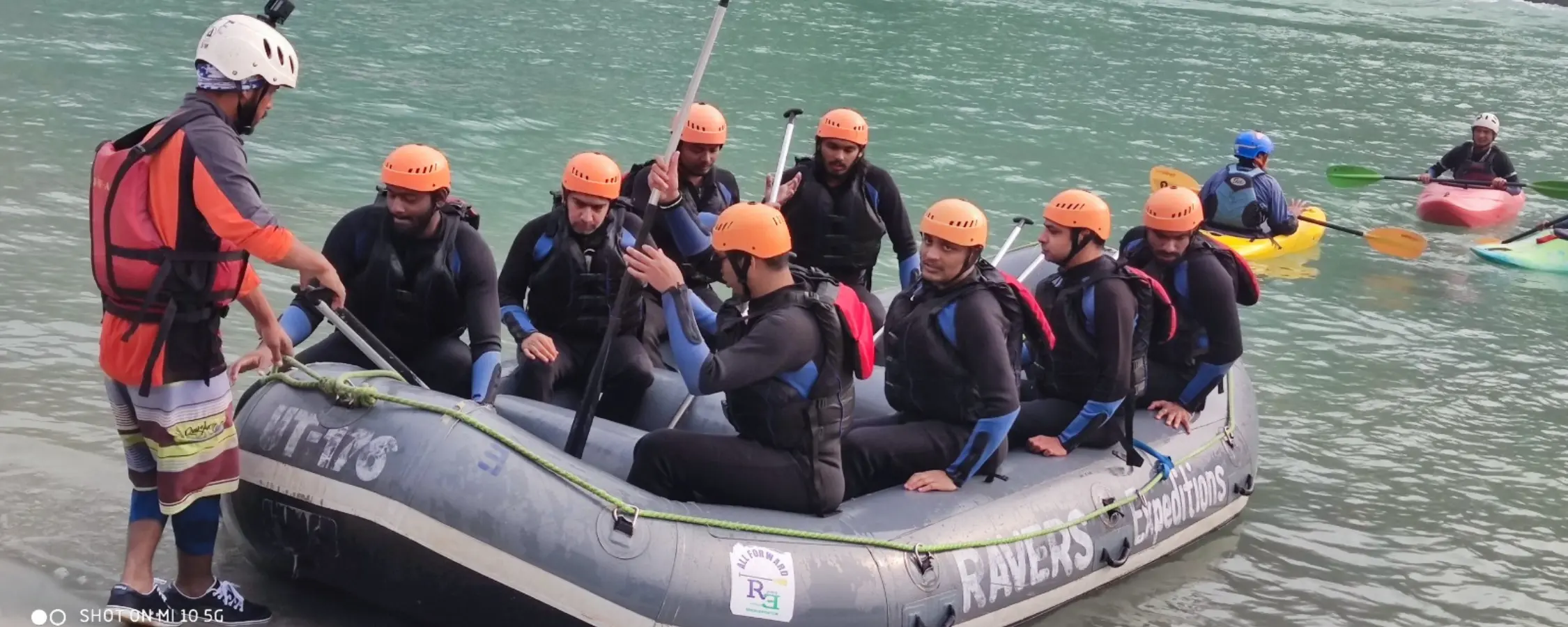
Safety First
Rishikesh has one of the most exciting adventure sports in India, which is river rafting and is visited by thousands of travellers annually. However, one of the questions which usually comes to mind prior to booking: Is river rafting in Rishikesh risky? The simple answer will be-yes, similar to any adventure sport, there are certain degrees of risk, but with appropriate safety precautions, experienced guides and knowledge it will be a very good and safe fun.
In case you are thinking about Rishikesh Water Rafting, this in depth guide will alert you to the dangers, the precautions the best practices and tips which would make it a safe and memorable adventure.
Know What Interests You River Rafting In Rishikesh Before Getting Into The Dangers! It is Better to Know Why It is So Popular.
Rishikesh is on the Ganges River that has some quiet and thrilling rapids. These rapids are graded into various levels such as Grade I (easy), Grade IV (challenging) among others. This diversity renders it to both amateurs and professional rafters.
Some of the most popular rafting stretches are:
The degree of thrill and difficulty is different in each stretch and this directly influences the degree of risk.
Admittedly, river rafting is associated with some risks which can be controlled. The risk is determined based on various factors that include water flow, weather conditions, rafting stretch and your physical fitness.
Nevertheless, rafting in Rishikesh is regarded as a relatively safe adventure sport when compared to most of the other adventure sports due to the following reasons:
The trick is to know which risks it is and to adhere to all safety guidelines.
1. Fall out of the Raft.
The most common hazard while white-water rafting is falling out of the raft,
especially in challenging rapids. However, you are safe to wear a life jacket.
2. Hitting Rocks
When in a rapid movement in the rapids, there is the likelihood of hitting
rocks. And that is why during Rishikesh Water Rafting the use of helmets is
compulsory.
3. Strong Currents
There may be strong currents in the Ganges especially at times of full overflow.
It may be hard to control the movement of water without appropriate guidance.
4. Weather Conditions
The change of weather may lead to a rise in risk. Water can be caused to rise
and the rapids can be enhanced by rain.
5. Panic and lack of awareness.
The fear and panic may further complicate things. It is important to remain
composed and obey directions.
River Rafting In Rishikesh is also a controlled activity that is geared towards minimizing risk despite the risks associated with it.
1. Professional Guides
All the rafts are guided by the professionals that are trained and are aware of
the river behavior and methods of responding to an emergency.
2. Mandatory Safety Gear
You will be furnished with:
These are imperative and considerably minimise risks.
3. Pre-Rafting Safety Briefing
Guides discusses beforehand:
4. Rescue Support
The rafting routes have safety kayakers and rescue crews to offer rescue during
emergencies.
5. Controlled Rafting Zones
Rafting grounds and unsafe zones are patrolled by the authorities and closed
particularly when there is a lot of water in the river.
The choice of the rafting stretch is one of the largest influencing factors of risk.
Beginner-Friendly Options
Moderate Adventure
High Thrill (Individuals with Rafter Experience)
I do not recommend entering advanced levels in case you are new. Begin simple and slowly develop.
Time is an important factor of safety. The Rishikesh Rafting Season Guide will enable you to select the safest season.
Ideal Months
During these months:
Avoid During Monsoon
The Rishikesh Rafting Season Guide allows you to plan your trip in a way that minimizes the risks.
Although rafting is considered to be safe to most people, there are people who must not venture into it:
It is always important to make your guide informed of any medical condition prior to commencing.
In case you are going to have your first Rishikesh Water Rafting experience, you can remember the following tips:
Myth 1: It is So Dangerous.
Reality: It is an adventure activity that is under control with
the right precautions.
Myth 2: It Can be done only by Experts.
Reality: Novices are able to have safer stretches with ease.
Myth 3: There is Danger in Falling in Water.
Fact: Life jackets will hold you up and the rescuers are fast.
Rafting also remains popular among adventure lovers due to:
To most of them it would be the best part of their visit.
There are strict guidelines that professional rafting companies have to adhere to:
By making a reservation with reputable sites providing River Rafting In Rishikesh then chances are high that you will receive quality services.
It is among the greatest fears of novices.
If you fall:
It is not unusual to fall into the river, and it is normally dealt with easily.
Interestingly, rafting is usually safer than such activities as:
The reason behind this is that rafting engages a team, trained guides and close supervision.
Perceived risk can be enhanced by fear. Being mentally prepared helps you:
Confidence contributes significantly to the minimization of risk.
In making your rafting reservation:
Dependable companies that provide Rishikesh Water Rafting do not compromise on safety.
The Ganges is a natural stream, and things may change:
This is why it is crucial to look at the Rishikesh Rafting Season Guide prior to planning your trip.
Rishikesh river rafting is not dangerous as long as it is undertaken responsibly, though there is a certain measure of risk involved. The correct safety equipment, trained guides and timing make it a safe and exciting adventure that can be enjoyed by the majority of people.
The moral of the story is easy to understand:
This way you can have a wonderful time River Rafting In Rishikesh without much unwarranted fear and have unforgettable memories.