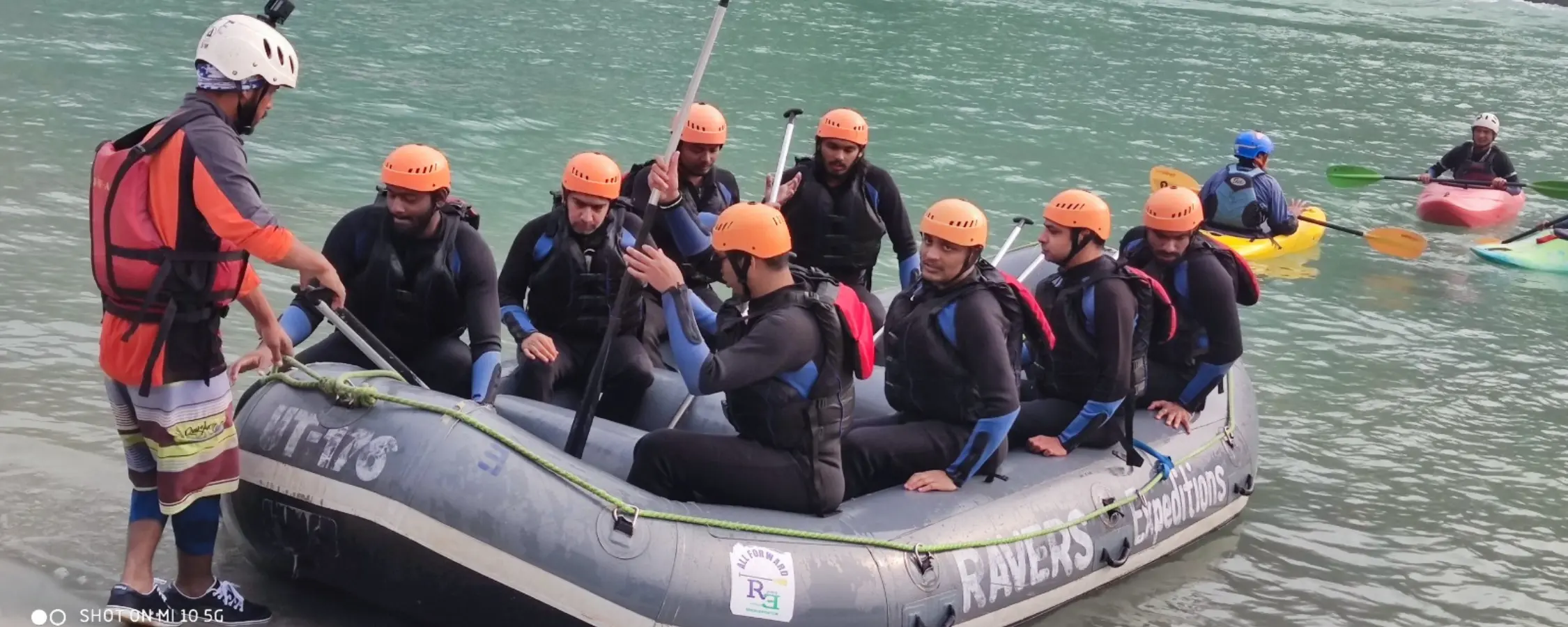
Learn Kayaking
Outdoor, adventure and river activity lovers, a kayaking course in Rishikesh can be a good thing to learn. Rishikesh is known for the Ganga River, its beautiful mountains, and its exciting water activities. Kayaking is the activity of riding on the front of a small boat and moving it along with a paddle.
The proper kayaking course in Rishikesh is more than just a paddling course. Learn to pilot a kayak, safety procedures, reading the water level on the river, and how to deal with various wave heights. Beginners can gradually develop their confidence and experience of kayaking through the proper training in a safe and enjoyable manner.
It is now a popular destination for those interested in acquiring knowledge of river sports in Rishikesh. Ganga provides diverse water conditions, which makes the place a good learning and practising facility for new learners as well as those desiring enhancement of their skills.
A kayaking course in Rishikesh is useful as you learn from the expert trainers and do not have to do the experiments of trying to learn the very difficult techniques of the river on your own.
Why is Rishikesh an ideal place for kayaking training?
There is no better alternative than proper training if you are looking for kayaking in Rishikesh and not wishing to get into the river without knowing the handling of the kayak.
The length of the Rishikesh kayaking course will vary according to the level of the course and what you are looking to learn. Depending on the program, it may be a short course with emphasis on basic skills or a longer training session to allow longer practice time to develop river skills.
The length of a beginner course depends on the training plan but may take a few days. Typically begins on land over water and then progresses in the water.
You may learn:
This level is recommended for those who have not been involved in a kayak before.
Once basic training is done, intermediate training will be done to gain better control. You can work on more powerful paddling, turning, balance and swimming in fast moving water.
If a longer kayaking course is arranged in Rishikesh, then there will be more time for the learner to get comfortable with the kayak.
Advanced lessons are created for people who have the basic kayaking skills. River reading, advanced strokes, rescuer skills, stronger currents and harder water conditions may be included in the training.
The length of time may differ based on the training programme and the student's performance level.
The kayaking course charges in Rishikesh may vary from one to another depending upon various factors. The costs of each course vary, depending on the length of the course, the equipment required, the instructors and the difficulty of the course.
The cost can vary on the following factors:
Don't consider just the lowest priced kayaking course in Rishikesh. Review the course content, and see if safety training is part of the course.
The proper instruction, equipment and practical learning should be stressed in a good course.
The lessons that a kayaking course in Rishikesh imparts can make you a more confident paddler. The lessons are generally sequential with an increase of complexity.
Knowing your equipment prior to entering the water is important. Instructors can demonstrate the use of the safety equipment: kayak, paddle, helmet and PFD.
Knowing how each item operates will enable you to operate your equipment properly.
Kayaking is about paddling. You will learn various strokes for moving the kayak forward, backwards and sideways.
Use good paddle technique to help you move with greater economy and ease.
The initial balance of a kayak may be unsettling. Training will help you learn how to balance your body and control the boat.
Over time, movements which are initially challenging may become simpler.
Must know how to turn the kayak when on the river. Teachers teach various turns and turns of the body for changing direction.
Such skills are beneficial when performing in calm waters and on a river.
It's not just about paddling when it comes to kayaking in Rishikesh. It is important to have an understanding of the river as well.
You can get instruction in how to observe:
The skills are increased as the levels of training increase.
There should be emphasis on safety in all kayaking courses in Rishikesh. In case of a loss of balance and/or abandonment of the kayak, instructions can be given on what to do.
Training will include safe river practices, swimming skills and assisted and self rescue, depending on the level of the course.
It is not always possible to provide the same training to each learner. The selection of the proper size can facilitate learning and make it more fun.
This is a level for those with no or little experience in kayaking.
Focus areas include:
The level is for those who have a certain level of kayaking proficiency.
Training can be for more powerful strokes, faster water, river flow and better kayak control.
Training courses are for people with some experience and practice who wish to enhance their river skills.
It can involve difficult water, advanced rescue techniques, water navigation and improved decision-making.
You should make transitions between levels based on your skills, comfort and direction from the instructor.
With a bit of preparation, training will be easier.
Things to Carry
Don't carry valuable equipment when river fishing. Parks and other activities involving water may make phones and other valuables hard to safeguard.
Many first time kayakers wonder if kayaking is difficult. This will depend on who is running the course, the quality of the water and the level of the course.
Balancing and paddling at first might seem unusual. These skills can be made easier with proper instruction and practice.
The first time the beginner takes a dip in advanced rapids, he should not go into a hard one. Begin basic training, and only proceed on to the next level when your instructor is convinced you are ready.
Kayaking lessons can be a valuable skill in the outdoors while out on the river. Prolonged enjoyment of the water is not the only goal of a proper kayaking course in Rishikesh; it can teach you the art of paddling, balancing, understanding the flow of the river and safety during kayaking.
Beginners can begin with a few steps and gradually increase their confidence with the right amount of training. In case you want to enjoy kayaking in Rishikesh, select the course which is appropriate for you and ensure you receive appropriate training and safety measures.
You can find various kayaking and adventure activities on Ravers Expeditions and train based on your plans, skills and experience.