Explore
White water rafting is by far the most exciting adventure sport in India and Rishikesh ranks as the best destination for experiencing this adrenaline rush. With the strong yet sacred Ganga River running through Himalayan foothills, rafting in here is not just exciting but also spiritually grounding. That said, as thrilling as it is, whitewater rafting is also an adventure sport, and the chance of falling out of the raft is real — particularly on higher-grade rapids.
If the idea of tumbling into fast river water makes you anxious, you are not alone. Many first time rafters have the same question: What do I do if I fall in while white water rafting? The good news is that falling out doesn’t have to be ever dangerous if you react correctly. In fact, most protocols for rafting safety have been developed in response to this very situation.
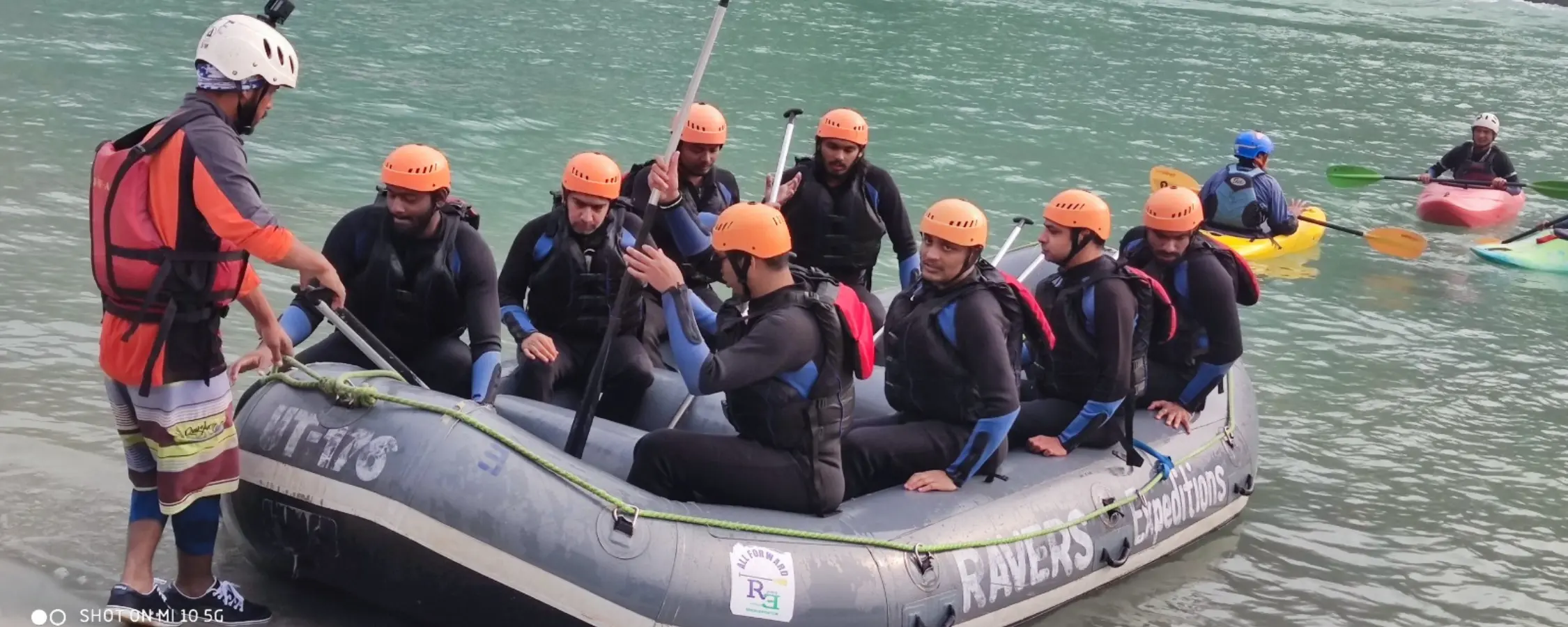
This comprehensive guide from Ravers Expeditions covers everything you need to know to do before, during and after a fall from a raft in order to keep calm, safe, and confident on the river. Whether you are planning your first rafting trip or moving up to more difficult rapids, this guide provides solid information to help you get ready, mentally and physically, for real river conditions.
Before learning what to do if you fall out, you should understand why people fall in the first place. In fact, getting thrown out of a raft doesn’t necessarily mean that something went wrong. It’s all part of the experience, sometimes.
One of the most typical causes is being thrown off balance by an abrupt plummet or large wave. The turbulent water usually will make the raft tip, tilt or bounce in an unpredictable manner. These ripples occur because beginners aren’t used to these movements, and they often fall.
Another big factor is that either you're not sitting properly or your feet aren't positioned correctly. When it comes to rafting, the feet must always be hooked firmly into the raft’s foot holds. If you’re feet are not tied down, you can be thrown off by a sudden jolt.
Extreme-grade rapids can also throw rafters out of their rafts due to strong hydraulics and cross-currents. Well, even good rafters sometimes fall out on Grade III or IV rapids, especially on technical runs.
To conclude, panic-folds are unforgiving. When rafters tense up their bodies or make a sudden movement to stand, try to remain still and calm.
Falling out is not a failure— it’s a situation trained guides and safety systems are designed to address.
Once you go over the falls or fall into the river, your body’s natural reaction might be fear. Cold water, swift currents, and rattle can be intimidating. Still, the biggest risk factor in any rafting accident is panic.
Equipment for whitewater rafting is floated and protective. Your life jacket keeps your chest afloat and helmet shields your head from rocks and impacts. Trust your gear.
Keep in mind that professional rafting guides are highly trained in rescue situations. At Ravers Expeditions guides are constantly watching the river and rafters, particularly through difficult rapids.
The more you stay calm, the more you will be able to move and use the safety rules.”
As soon as you are in the water, your body alignment is the most important safety factor. Emptying incorrectly increases your chances of striking boulders, pinning.
Adopt immediately the defensive swimming position (which is the safest position in swiftly moving water).
Stay lying on your back, face up and have your feet slightly raised above the surface of the water. Your knees should be bent, with your toes pointing upwards. This stance cushions the blow should you hit a submerged rock with your leg or foot.
Softly pump with your arms to propel yourself, keeping them out wide for stability. Do not struggle or panic.
With this move, you can safely drift over rapids and keep a look out for where the river is flowing.
One of the biggest errors for those who fall while rafting is trying to stand right away once they've gone overboard. Rivers such as Ganga flow at great speeds and exert tremendous power and standing up before time could lead to injuries.
When you are in fast-moving water, your feet can get pinned between rocks as the current shoves your body downstream. This condition, known as foot entrapment, is very hazardous and has caused fatalities.
Stand up only when:
The water is calm and shallow
Your guide gives clear instructions
You are close to the riverbank
Until then, float safely and let the current carry you.
When you fall out just before or in the middle of a rapid, there are certain things you need to do.
Stay in your defensive position and let the rapids run you. Rapids can be scary to look at, but water has a way of pushing things that float, like logs and boats, to safer channels. Don't fight the current.
Look ahead and look for signals from your guide. Guides will sometimes direct swimmers to the raft or shore by using hand gestures or vocal commands.
If you can see the raft, swim hard toward it, but only when the water is somewhat calm. You can be exhausted in no time by swimming against a strong current in the rapids.
After you have passed the rapids and are in calmer water, your guide may tell you to swim to the raft.
Turn on your stomach, keep your head up, and swim using strong strokes towards the raft or safety line. Approach the raft from the side never from the front or rear, paddles and ropes are a risk.
Hold on to the safety rope tightly and wait for instructions. Rescue handles – the majority of rafts come with handles that guides use to help bring swimmers back onto the raft.
Don't try to climb back on your own unless it is safe and you are instructed to do so.
Strong currents might occasionally carry you away from the raft. If it does just don’t go after the raft too aggressively.
Stay on your back with a defensive hand position, and simply focus on staying afloat. Your guide may throw a rescue line for you to catch with both hands and hold it close to your chest.
Once you get the rope, lay on your back and the guide will pull you in. Do not loop the rope around your hands or body.
If the raft is drifting downstream, the guides will perform a coordinated rescue from predetermined stations along the river to ensure your safety.
Among the best safety aspects in rafting is having certified river guides. At Ravers Expeditions, guides are rigorously trained in swift water rescue, first aid and emergency response.
Guides regularly evaluate the river, the rafts and the group members. If a person goes overboard, the guide's top priority is verbal reassurance and rescue with controlled actions.
They decide whether to bring out the swimmer right away, or to escort them safely through the rapid before rescue. This decision-making is river smarts and experience.
You can bank on your guide 100 percent- they are your best safety asset.
The risks are greatly mitigated by modern rafting gear. All participants are given:
High-quality life jackets that allow you to keep your airway above water
Helmets that make rock impacts painless
Self-bailing rafts that trap air and remain afloat in even the roughest water
Throw bags and rescue ropes are used for speedy recovery
At Ravers Expeditions, equipment is periodically tested and within international rafting safety standards.
There are many people who don’t ever go rafting because they have the wrong idea of what it’s like. Let's clear a few ones for good.
It’s a common myth that falling out means getting hurt. "Most people fall out of rafts all the time.
There’s also a myth that you only fall out when you’re a novice. Even professionals can fall on any run, it is part for the sport.
The river, they say, pulls people underwater. The reality is that life jackets are made to withstand the force of a powerful current and keep you afloat.
There’s a lot in white water that’s about going with the flow and not trying to fight it. Falling out of the raft can be intimidating, but it is a manageable and safe circumstance if you have the right knowledge, equipment, and guides.
When you calm down, hold the proper position, trust your guide and respect the river, you turn potential fear into an educational experience.
Safety is not at Ravers Expeditions a mere protocol or sequence of compliance to rules – but a mindset. Knowing what to do if you fall out while white water rafting means you’re not just a passenger you’re a bold river adventurer! adventure favors the prepared you’ll find, time and time again.
Let the river guide you, challenge you, inspire you — safely.